
That Mystery Package Isn’t a Gift. It’s a Warning About Your Data
An unexpected package arriving at your home may seem like a harmless shipping mistake.
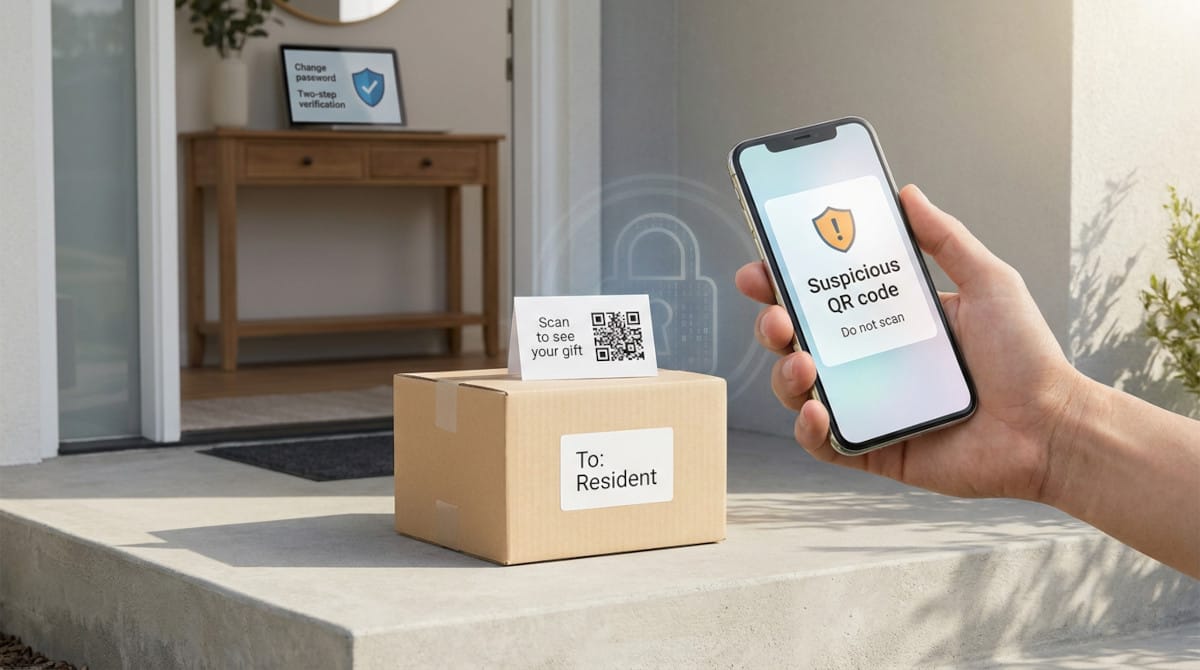
However, it could be evidence that your personal information has been compromised. The article describes a practice known as a "brushing scam," in which dishonest online sellers obtain a person's name and address, send an inexpensive item, and then use the delivery to create a fraudulent "verified purchase" review. A newer and potentially more dangerous version includes a QR code that may lead to a phishing site designed to steal financial information or expose your device to malware.
If an unordered package arrives, you do not have to pay for it and can keep, discard, or donate it. More importantly, do not scan QR codes, visit websites included with the package, or pay a supposed shipping fee. The article recommends changing passwords on shopping accounts, enabling two-factor authentication, checking for purchases or reviews you did not make, and watching credit reports and card statements for suspicious activity.
A mystery package does not necessarily mean someone has access to your financial accounts, but it is a warning that some of your personal information is already circulating. Treating it as an opportunity to review passwords, account security, and credit activity can help prevent a relatively harmless package from becoming a much more expensive identity-theft problem.
Read the full article here